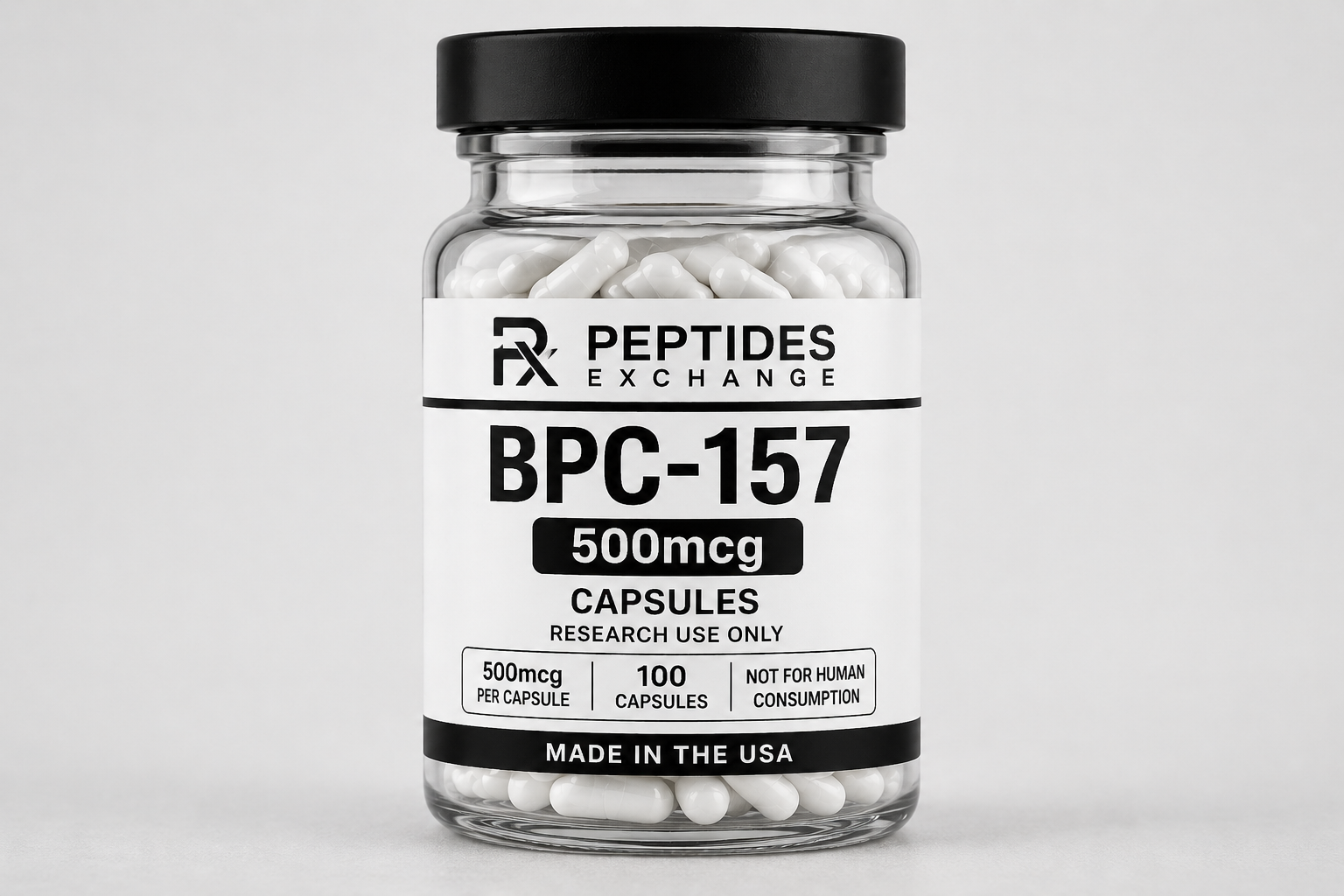
BPC-157 500mcg (100 capsules)
BPC-157 is a widely used research peptide, and it’s now offered in an easy-to-use capsule form through Peptides Source.
These BPC-157 capsules (500 mcg, 50 count) are produced in the United States, undergo purity testing, and are carefully packaged to support reliable use in scientific and laboratory settings.
Designed for efficiency, each capsule contains a precise 500 mcg dose, making it easier to expand research efforts while minimizing inconsistencies often associated with powders or mixed formulations.
Peptides Source is a trusted supplier for researchers nationwide, focused on delivering high-quality peptides along with proper documentation. Orders are processed promptly, shipped discreetly, and supported by clear, consistent quality standards.
Order BPC-157 5mg for Laboratory Research
BPC-157 (Gly-Glu-Pro-Pro-Pro-Gly-Lys-Pro-Ala-Asp-Asp-Ala-Gly-Leu-Val) is a synthetic peptide consisting of 15 amino acids, commonly studied in preclinical environments for its influence on cell growth, movement, and inflammatory signaling pathways. It is widely used in controlled laboratory models to evaluate reproducible dose-dependent cellular responses.
Mechanism and Research Background
Experimental studies suggest that BPC-157 interacts with several intracellular signaling pathways associated with growth factor activity. In vitro research using fibroblast and endothelial cell cultures has shown increased expression of factors such as VEGF and FGF. Additional studies in immune cell models indicate modulation of inflammatory responses, while epithelial cell assays demonstrate enhanced migration behavior in wound-healing models. Mechanistic investigations point to involvement of pathways such as Ras/MAPK, PI3K, and eNOS, with measurable downstream signaling activity.
Overview of Scientific Literature
Research published in PLOS ONE (2014) explored signaling activity across different cell types using gene expression and phosphoprotein analysis. A broader review in Molecules (2020) summarized findings from multiple preclinical studies related to tissue repair and inflammation. Further work in Frontiers in Pharmacology (2021) examined angiogenesis and cellular interactions in advanced tissue models.
Laboratory Applications
BPC-157 is frequently applied in studies involving fibroblast proliferation, epithelial repair assays, endothelial tube formation, and macrophage-driven inflammation models. Typical working concentrations in cell culture experiments range from approximately 10 to 100 nM, depending on experimental design.
Product Details – BPC-157
Supplied as 15mg of lyophilized peptide powder. Recommended storage is at -20°C in a sealed, moisture-controlled environment. Purity is typically ≥98% as confirmed by HPLC analysis. For research use, reconstitution is commonly performed using sterile saline or phosphate-buffered saline at concentrations between 1–10 mg/mL. Stability is generally maintained for up to 24 months under proper storage conditions.
Research Use Statement
This product is intended strictly for laboratory research purposes. It is not approved for human consumption, medical use, or unapproved animal studies. All use should follow institutional safety protocols and applicable regulatory guidelines.
)