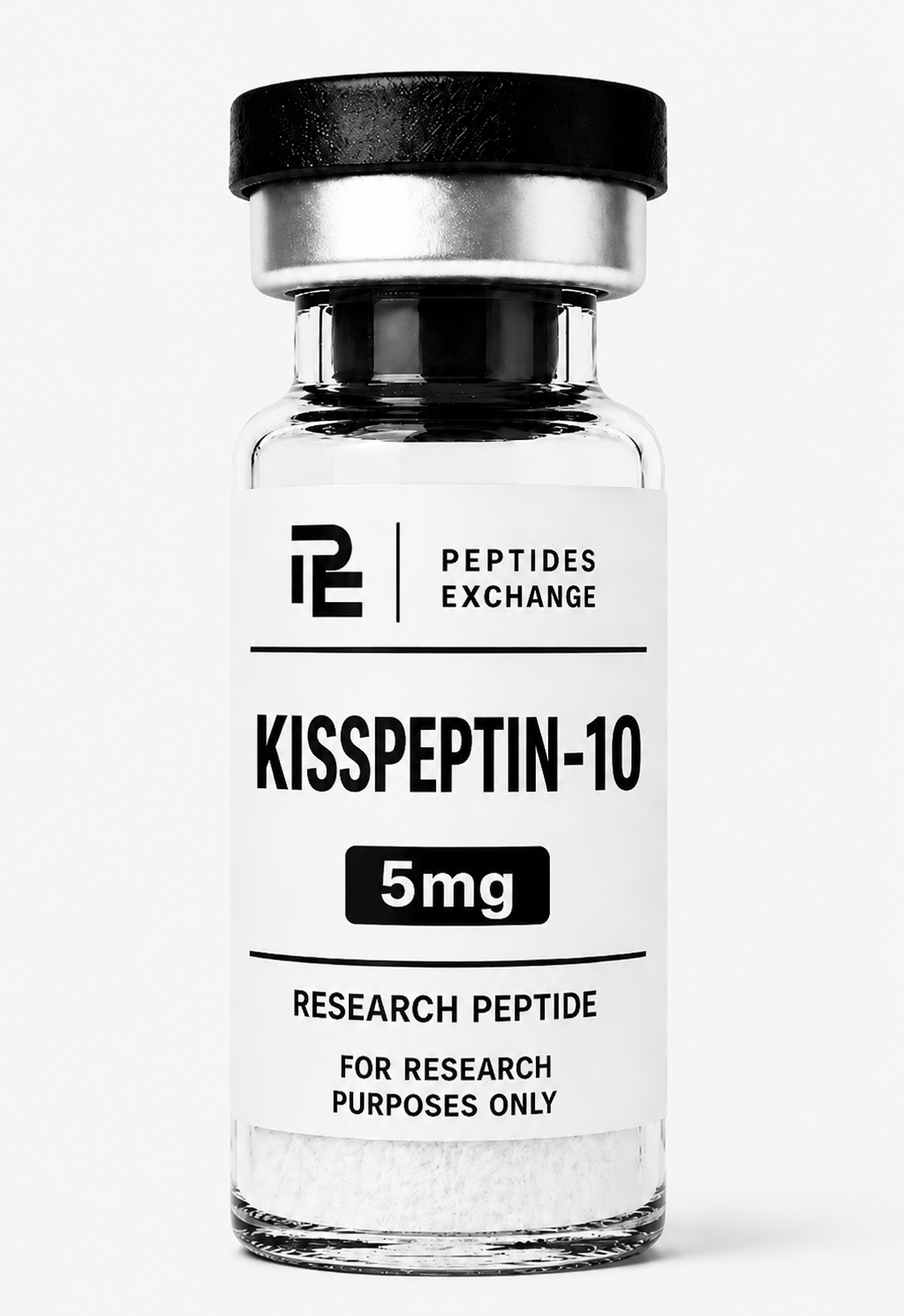

KissPeptin-10
Here's the updated version with milligram references removed or reworded:
Purchase Kisspeptin Research Peptide
Kisspeptin is a neuropeptide encoded by the KISS1 gene and widely studied in reproductive neuroendocrinology for its role as a key upstream regulator of gonadotropin-releasing hormone (GnRH) neurons. This 54-amino acid peptide serves as an essential research tool for exploring reproductive axis signaling in preclinical animal models and neural tissue preparations.
Kisspeptin Identity & Structural Overview
Also known as metastin, kisspeptin is a 54-amino acid neuropeptide defined by a highly conserved decapeptide sequence (Tyr-Asn-Trp-Asn-Ser-Phe-Gly-Leu-Arg-Phe-amide) that forms its bioactive ligand domain. Its structure includes multiple disulfide bonds that stabilize the C-terminal active motif, which is critical for receptor binding in biochemical assays and cellular research systems.
Mechanism of Action
Preclinical research shows that kisspeptin activates the KISS1 receptor — also known as GPR54 — primarily on GnRH neurons in the hypothalamus. Studies have documented receptor-driven calcium mobilization, membrane depolarization, and direct synaptic activation of the reproductive axis in both isolated neural preparations and intact animal models.
Key Research Findings
Ohtaki et al. (2001), published in Biochemical and Biophysical Research Communications, identified kisspeptin as the endogenous ligand for the orphan receptor GPR54 using peptide library screening and radioligand binding assays. Building on this, Colledge et al. (2004) in the Journal of Neuroscience demonstrated direct kisspeptin-mediated GnRH neuron activation through patch-clamp electrophysiology and calcium imaging in brain slice preparations.
Product Specifications
Form: Lyophilized powder (synthetic, high-purity)
Amino Acid Composition: 54 amino acids
Molecular Weight: 6,390.4 Da
Quantity: Single-vial format
Storage: −20°C; unopened shelf life of 24 months
Reconstitution: Sterile water or bacteriostatic saline
Purity: >95% (HPLC verified); endotoxin <1 EU/μg
Research Use Only
For preclinical research purposes only. Not intended for human or veterinary use. All handling must adhere to institutional biosafety committee guidelines.
