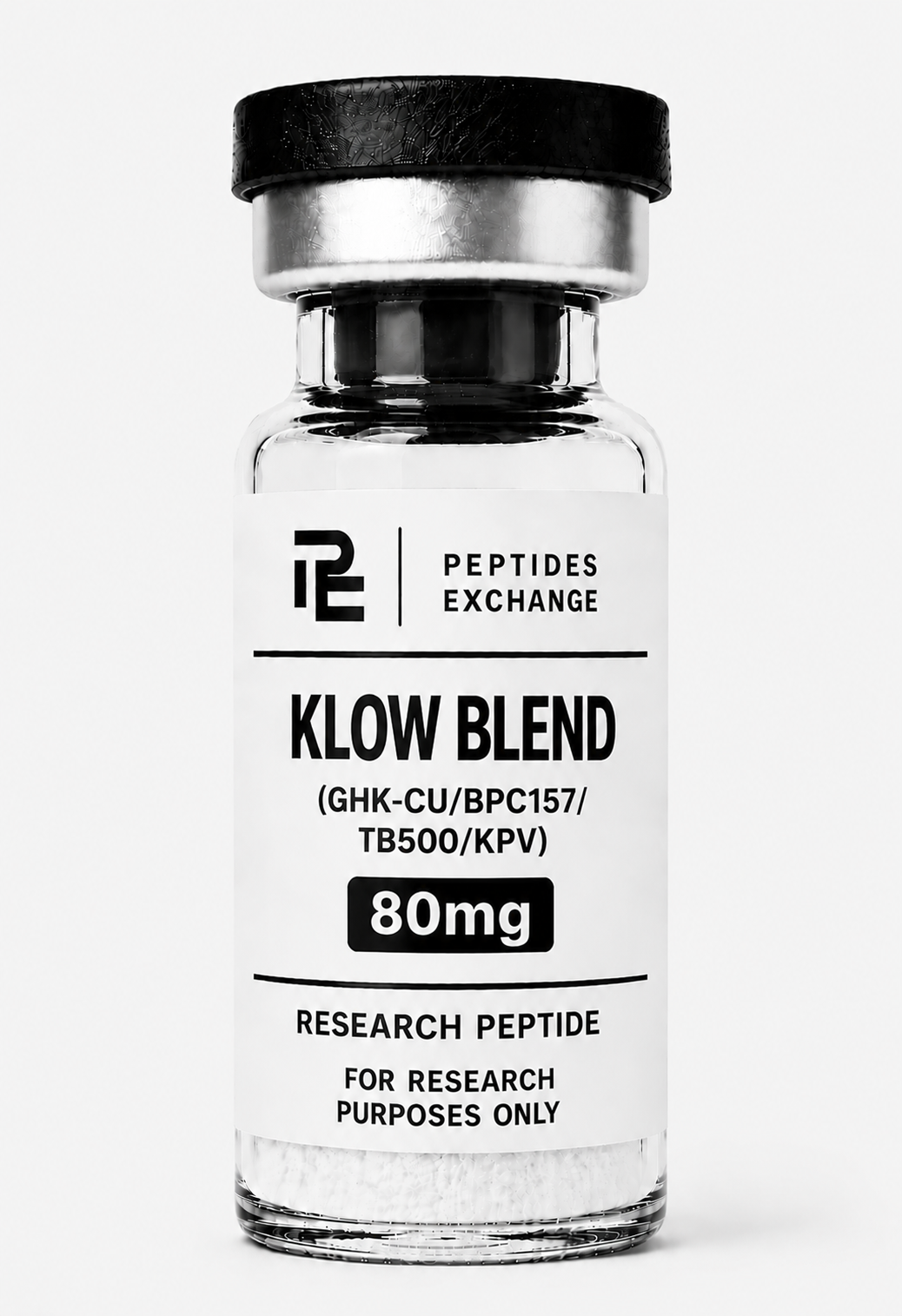
Klow Blend – (GHK-CU/BPC157/TB500/KPV) 80mg
Klow Blend (GHK-Cu + BPC157 + TB500 + KPV) Research Peptide Formulation
The Klow Blend is an advanced multi-component peptide research formulation combining four distinct bioactive compounds: GHK-Cu (a copper-chelated tripeptide), BPC157 (a 15-amino acid synthetic peptide), TB500 (beta-4 thymosin), and KPV (a tripeptide derived from the C-terminal sequence of alpha-melanocyte stimulating hormone). This four-peptide combination provides a comprehensive platform for investigating synergistic and independent mechanisms across overlapping biological pathways associated with tissue integrity, inflammatory modulation, cellular resilience, and extracellular matrix remodeling.
Klow Blend — Individual Component Mechanisms
GHK-Cu operates as a copper-coordinated complex engaging collagen biosynthesis, matrix metalloproteinase regulation, and growth factor signaling networks, with documented effects on fibroblast proliferation and extracellular matrix deposition in dermal and subcutaneous tissue research models. BPC157 exhibits a broad range of biological activity encompassing modulation of nitric oxide production, growth hormone release signaling, and vascular endothelial function across multiple preclinical model systems. TB500 (beta-4 thymosin) is an actin-binding peptide implicated in cytoskeletal organization, cellular migration regulation, and tissue remodeling pathway investigation. KPV, derived from the C-terminal tripeptide sequence of alpha-MSH, has been investigated in preclinical models for its role in anti-inflammatory signaling, NF-κB pathway modulation, and intestinal epithelial barrier integrity in cell culture and animal model systems.
Klow Blend — Research Background
The mechanistic foundation for each individual component is well-supported across published literature. Pickart et al. (1980) established the collagen-regulatory and growth factor interaction properties of GHK-Cu in tissue model systems. Sikiric et al. (2019) documented the broad cytoprotective and vascular modulatory activity of BPC157 across a range of preclinical models. Goldstein et al. (2005) characterized TB500's actin-sequestering properties and their downstream effects on cellular motility and tissue repair processes. Research into KPV has documented its capacity to attenuate pro-inflammatory cytokine production and modulate innate immune signaling in intestinal and dermal cell preparations. The combination of all four components within a single formulation creates a unique investigational platform, as coordinated multi-peptide protocols targeting collagen homeostasis, vascular signaling, cytoskeletal dynamics, and inflammatory pathway regulation simultaneously remain an underexplored area in current preclinical literature.
Klow Blend — Product Specifications & Storage
Form: Lyophilized blend
Composition: GHK-Cu, BPC157, TB500, and KPV combined per vial
Purity: ≥95% for each individual component, verified by analytical HPLC
Reconstitution: Bacteriostatic water or sterile saline recommended (volume per research protocol requirements)
Storage: 2–8°C in a sealed, moisture-protected container
Post-Reconstitution Stability: 72 hours at 4°C
Endotoxin Testing: LAL method verified
Research Use Only
This formulation is intended solely for in vitro and preclinical research applications conducted within regulated laboratory environments. It is not approved for human use, therapeutic investigation, or systemic administration outside of institutional oversight protocols. All research applications must conform to applicable regulatory frameworks and institutional guidelines governing multi-component peptide formulation research.
+80mg)