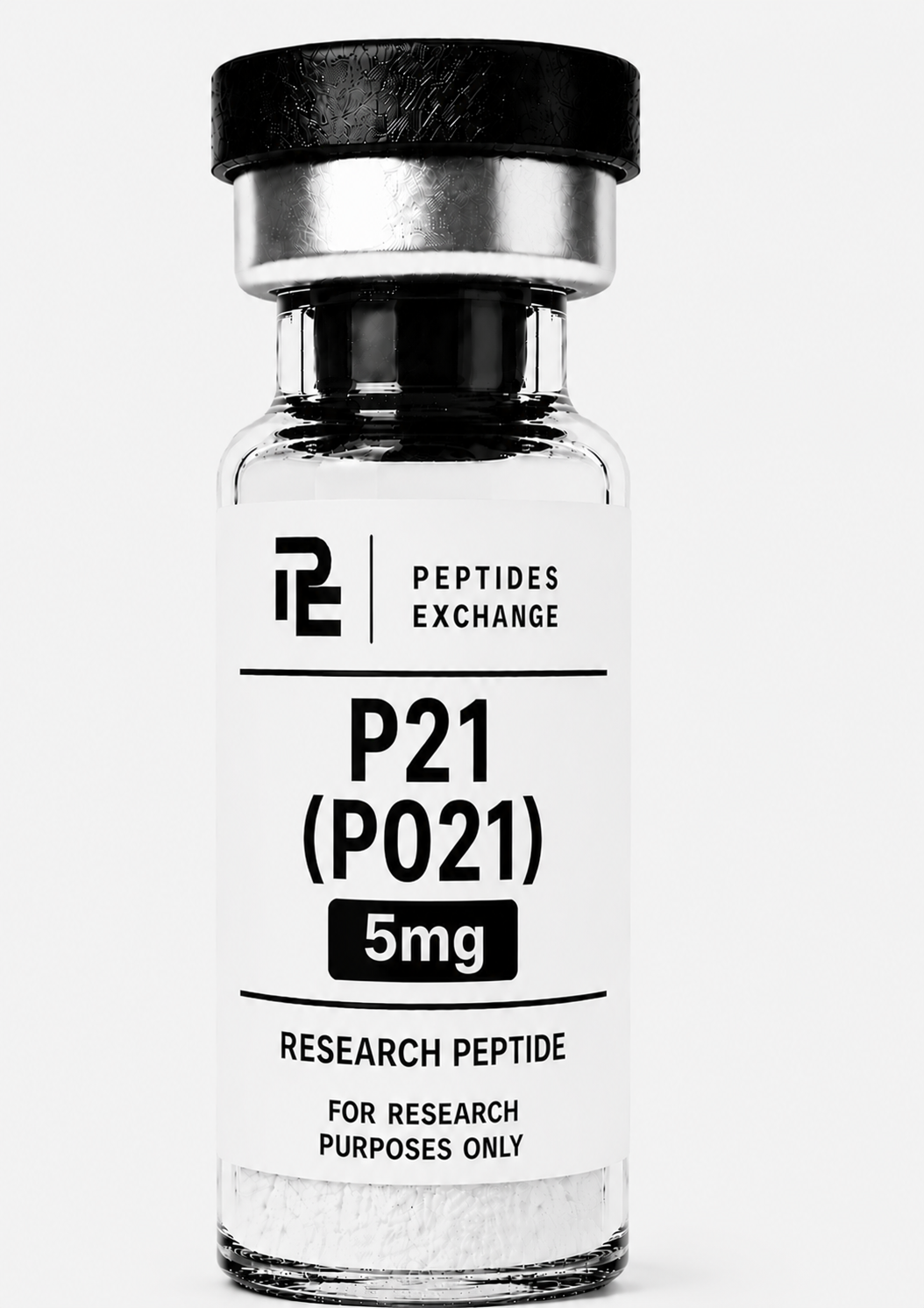
P21 (P021)
Purchase P21 (P021) Research Peptide
P21 (P021) is a synthetic tetrapeptide extensively studied in neuropharmacology and neurodegenerative disease research for its role as a potent enhancer of brain-derived neurotrophic factor (BDNF) signaling and neuroplasticity. This novel research peptide serves as a critical tool for investigating neurotrophic signaling cascades, tau pathology modulation, and cognitive function restoration mechanisms in preclinical models of neurodegeneration and age-related cognitive decline.
P21 (P021) Identity & Structural Overview
P21 (P021) (Ac-DGGLAG-NH₂) is a six-amino acid acetylated peptide derived from the BDNF loop domain region, specifically designed to activate TrkB receptor-mediated neurotrophic signaling without direct receptor binding. Its N-terminal acetylation and C-terminal amidation confer enhanced metabolic stability and favorable blood-brain barrier penetration properties documented in preclinical pharmacokinetic studies. The peptide sequence retains the critical BDNF mimetic domain essential for downstream neurotrophic signaling pathway activation in neuronal cell preparations and intact central nervous system models.
Mechanism of Action
Preclinical research demonstrates that P21 (P021) enhances endogenous BDNF expression and potentiates TrkB receptor signaling through indirect neurotrophic pathway activation, stimulating downstream MAPK-ERK and PI3K-AKT pro-survival cascades in cortical and hippocampal neuronal populations. Studies have documented its capacity to reduce pathological tau hyperphosphorylation through GSK-3β inhibition, enhance synaptic plasticity markers including PSD-95 and synaptophysin expression, stimulate adult hippocampal neurogenesis, and restore cognitive behavioral performance in tau transgenic and age-related cognitive impairment animal models. Additional research has characterized its ability to cross the blood-brain barrier following systemic administration in rodent pharmacokinetic preparations.
Key Research Findings
Foundational research by Bolognin et al. published in Neurobiology of Aging demonstrated that chronic dietary administration of P021 significantly reduced tau hyperphosphorylation, enhanced BDNF-TrkB signaling, and improved spatial learning and memory performance in aged rodent models without observable adverse effects. Subsequent work by Kazim et al. documented P021-mediated restoration of synaptic plasticity markers and adult neurogenesis parameters in tau transgenic mouse models of Alzheimer's disease pathology, while additional preclinical studies have characterized its neurotrophic and cognitive enhancing properties across multiple validated behavioral paradigms in intact animal preparations.
Product Specifications
Form: Lyophilized powder (synthetic, high-purity)
Sequence: Ac-DGGLAG-NH₂
Amino Acid Composition: 6 amino acids
Molecular Weight: 514.5 Da
Quantity: Single-vial format
Storage: −20°C; unopened shelf life of 24 months
Reconstitution: Sterile water or bacteriostatic saline
Purity: >95% (HPLC verified); endotoxin <1 EU/μg
Research Use Only
For preclinical research purposes only. Not intended for human or veterinary use. All handling must adhere to institutional biosafety committee guidelines.
)