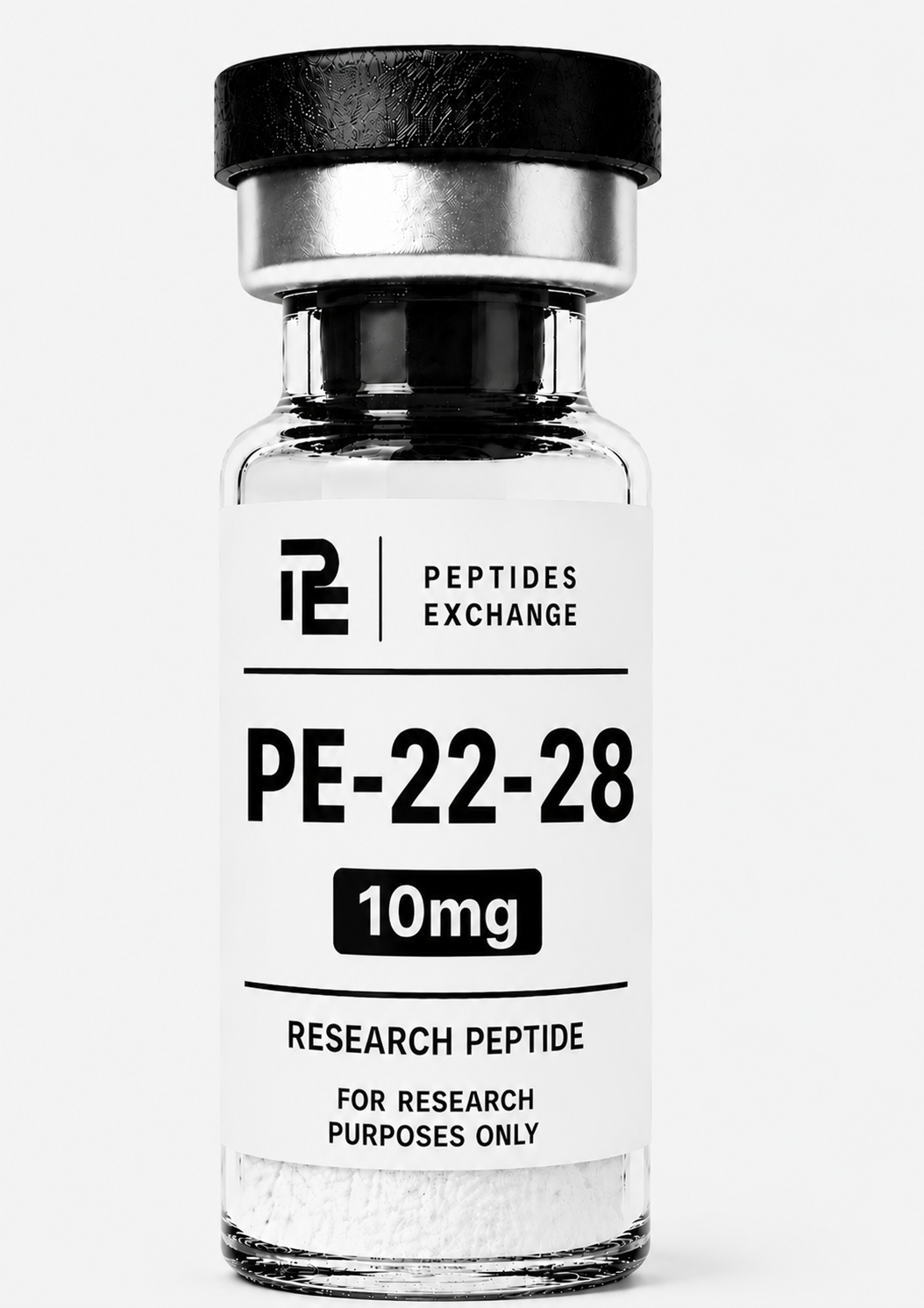
PE-22-28
Purchase PE-22-28 Research Peptide
PE-22-28 is a synthetic spadin analog peptide extensively studied in neuropharmacology and depression research for its role as a selective blocker of TREK-1 potassium channels. This novel research peptide serves as a critical tool for investigating antidepressant signaling mechanisms, serotonergic neurotransmission, and ion channel modulation in preclinical models.
PE-22-28 Identity & Structural Overview
PE-22-28 is a truncated and optimized analog of spadin, a naturally occurring peptide derived from the propeptide of neurotensin receptor 3 (NTSR3/sortilin). Structural optimization through selective amino acid substitutions at key positions confers significantly enhanced TREK-1 channel blocking potency and metabolic stability compared to the parent spadin peptide. Its compact sequence retains the critical receptor-interacting domain essential for channel pore occlusion in electrophysiological assay systems and neuronal preparations.
Mechanism of Action
Preclinical research demonstrates that PE-22-28 selectively inhibits TREK-1, a two-pore domain background potassium channel widely expressed throughout limbic and cortical brain regions implicated in mood regulation. Studies have documented that TREK-1 blockade by PE-22-28 promotes membrane depolarization of serotonergic neurons in the raphe nuclei, enhances synaptic serotonin availability, and activates downstream BDNF-TrkB neurotrophic signaling pathways. Additional preclinical studies have characterized its capacity to produce rapid-onset antidepressant-like behavioral effects in validated rodent models including forced swim and tail suspension assays, with documented onset kinetics superior to conventional monoamine reuptake inhibitors in isolated neural and intact animal preparations.
Key Research Findings
Foundational research by Mazella et al. published in Neuron originally identified spadin as an endogenous TREK-1 antagonist with antidepressant properties, establishing the mechanistic basis for TREK-1 channel blockade as a novel antidepressant target. Subsequent work by Djillani et al. documented the structural optimization of spadin into PE-22-28, demonstrating significantly enhanced TREK-1 inhibitory potency, improved metabolic stability, and superior antidepressant-like efficacy in preclinical rodent behavioral models compared to the parent compound, while additional studies have characterized its serotonergic mechanism and BDNF pathway engagement in isolated raphe neuron preparations.
Product Specifications
Form: Lyophilized powder (synthetic, high-purity)
Origin: Optimized analog of spadin (NTSR3/sortilin-derived propeptide)
Molecular Weight: 1,004.2 Da
Quantity: Single-vial format
Storage: −20°C; unopened shelf life of 24 months
Reconstitution: Sterile water or bacteriostatic saline
Purity: >95% (HPLC verified); endotoxin <1 EU/μg
Research Use Only
For preclinical research purposes only. Not intended for human or veterinary use. All handling must adhere to institutional biosafety committee guidelines.
