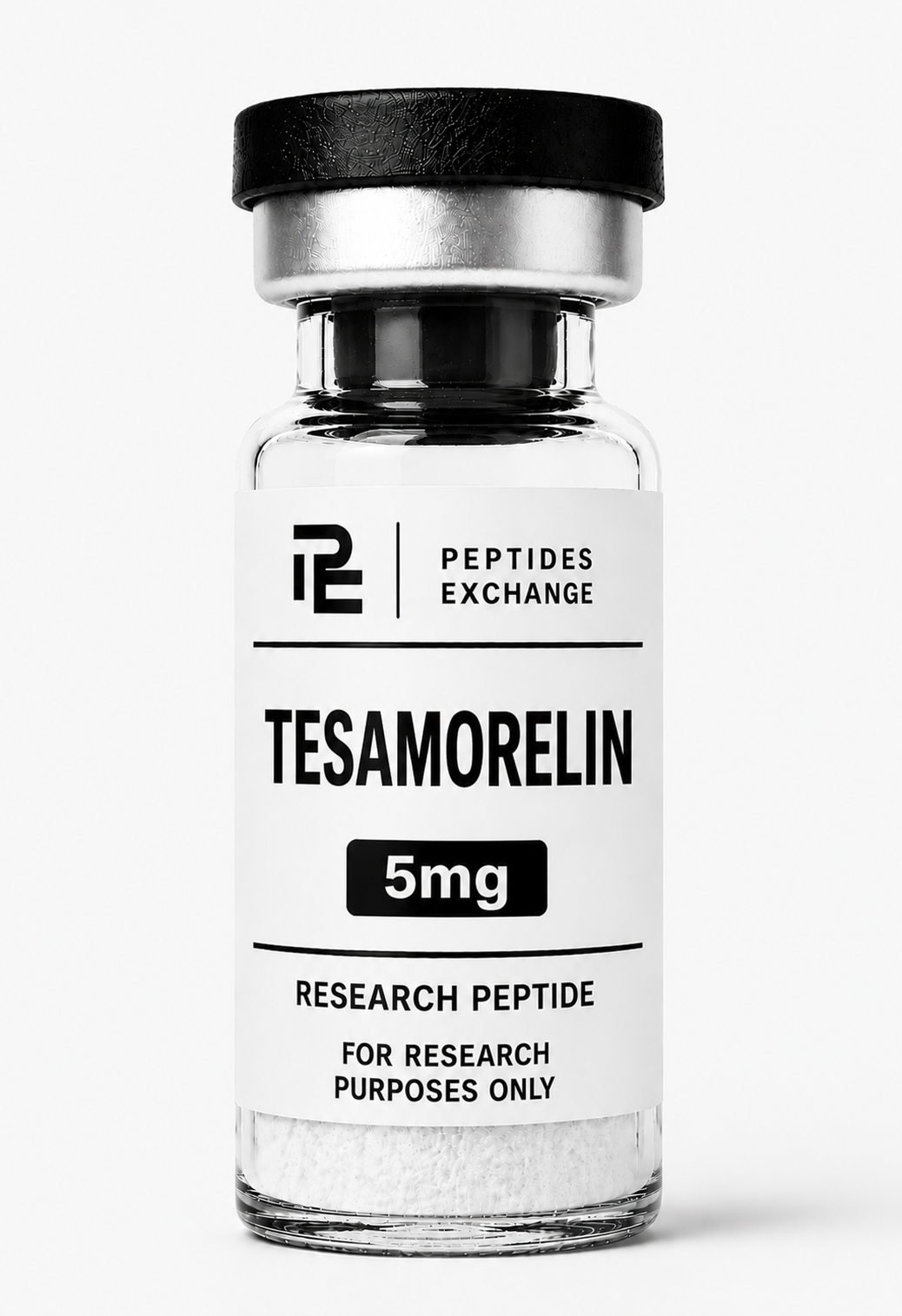

Tesamorelin
Tesamorelin Research Peptide
Tesamorelin is a synthetic analogue of endogenous growth hormone releasing hormone (GHRH), consisting of the complete 44-amino acid sequence of human GHRH coupled to a trans-2-hexenoic acid moiety at the N-terminus. This structural modification confers enhanced metabolic stability relative to native GHRH while preserving full receptor binding capacity, making Tesamorelin a valuable and well-characterized research tool for investigating somatotropic axis signaling, growth hormone secretagogue mechanisms, and hypothalamic-pituitary dynamics in preclinical laboratory model systems.
Tesamorelin — Mechanism of Action
Tesamorelin exerts its biological activity through high-affinity binding to the GHRH receptor (GHRHR), a G-protein coupled receptor expressed predominantly on anterior pituitary somatotroph cells. Receptor engagement activates adenylyl cyclase, elevating intracellular cAMP concentrations and initiating PKA-dependent signaling cascades that culminate in growth hormone synthesis and pulsatile secretion from pituitary secretory granules. Unlike direct growth hormone secretagogues such as GHRP-2 or GHRP-6, Tesamorelin operates exclusively through the endogenous GHRH receptor pathway, preserving physiological feedback regulation via somatostatin and IGF-1 axis mechanisms. This selectivity makes it a particularly precise research tool for isolating GHRHR-dependent signaling from broader secretagogue receptor activity in comparative preclinical study designs.
Tesamorelin — Research Background
Falutz et al. (2007) conducted foundational clinical and preclinical characterization of Tesamorelin's somatotropic activity, documenting consistent and reproducible growth hormone stimulation profiles across study populations and model systems. Subsequent preclinical literature has examined Tesamorelin's effects on IGF-1 axis regulation, visceral adipose tissue metabolism, and lipid homeostasis pathways in animal model preparations. Research published in endocrinology and metabolism literature has further documented the peptide's influence on hepatic lipid processing, triglyceride clearance mechanisms, and adipocyte lipolytic signaling in both in vitro and in vivo preclinical contexts. Additional investigation has explored Tesamorelin's neuroprotective properties, with preclinical models examining its effects on cognitive function markers, neuroinflammatory pathway modulation, and brain-derived neurotrophic factor expression in central nervous system tissue preparations.
Tesamorelin — Product Specifications & Storage
Form: Lyophilized powder
Purity: ≥98%, verified by analytical HPLC
Identity Confirmation: Mass spectrometry
Reconstitution: Sterile bacteriostatic water or normal saline recommended; allow equilibration to room temperature prior to use
Storage: 2–8°C (solid state); protect from light and moisture
Post-Reconstitution Stability: 48–72 hours at 4°C; repeated freeze-thaw cycles should be avoided to preserve peptide structural integrity and biological activity
Research Use Only
Tesamorelin is designated exclusively for preclinical and in vitro laboratory research applications. It is not approved for human use, therapeutic administration, or clinical investigation outside of regulated institutional oversight. All research protocols must conform to applicable institutional guidelines, animal care regulations, and biosafety procedures governing the handling of synthetic GHRH analogue research compounds.
